Maritime Decarbonisation: Navigating Uncharted Waters
17 Dec 2025
The maritime industry stands at a critical juncture. As climate change accelerates, the sector—responsible for nearly 3% of global greenhouse gas emissions—finds itself in uncharted waters. Decarbonisation is no longer an aspirational goal. It is an imperative.
The International Maritime Organization (IMO) has set an ambitious target of reducing emissions by 50% by 2050 compared to 2008. With the conclusion of the IMO Marine Environment Protection Committee (MEPC) 83 session, which saw key decisions on new fuel standards and a global emissions pricing mechanism, the maritime industry now faces two pressing priorities: adopting new technologies and accelerating the transition to alternative fuels. Captains of industry, experts and government officials took to the stage in a series of lectures and panel discussions to address these issues at this Singapore Maritime Week 2025.
Adoption of New Technology: Merging Man and Machine
AI and Big Data: Smarter Voyages, Smarter Choices
Artificial intelligence (AI) and big data analytics are revolutionising vessel operations, enabling predictive maintenance, optimising fuel consumption, and charting more efficient courses. AI-powered route optimisations can reduce fuel use by up to 10%, a significant gain in an industry where operational efficiency and cost savings go hand in hand. However, technological innovation must be paired with human adaptability. As Hannu Mäntymaa, Vice President of Voyage Services at Wärtsilä Marine, aptly pointed out, “It’s not as simple as simply putting an AI solution in. It’s also about the knowledge to interpret AI-generated insights.”
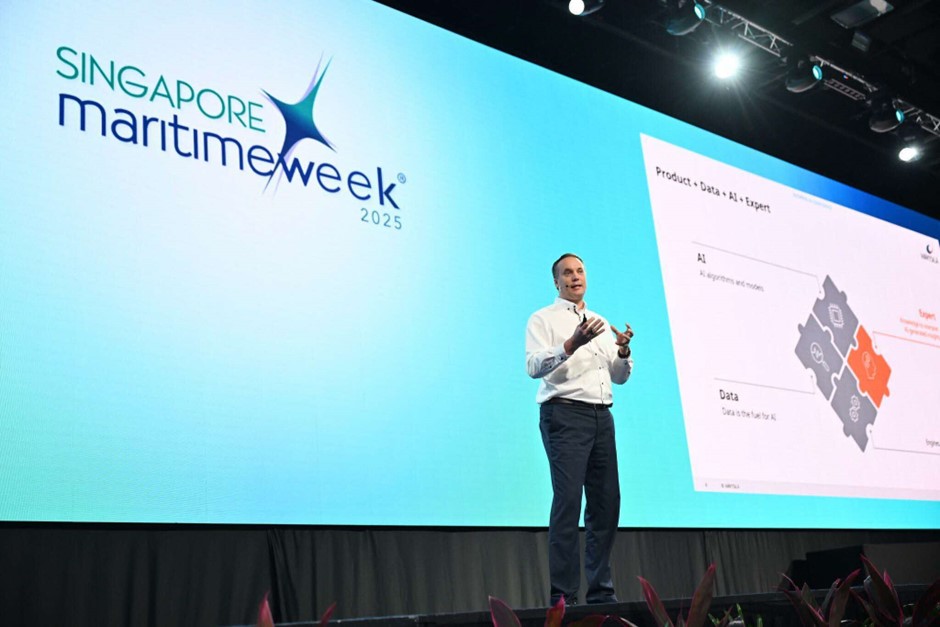
He also stressed, "The benefits will not come if you simply put the software engineers in a box and get them to build a solution.” He explained that success in AI adoption requires a multidisciplinary approach where technology, human expertise, and a commitment to behavioural change converge. “AI will drive a transformative leap in maritime operational efficiency, but it cannot achieve this alone. Experts are crucial for interpreting AI insights, and commitment to behavioural change is key for turning these insights into concrete operational improvements.” Without this synergy, the full potential of AI remains untapped.
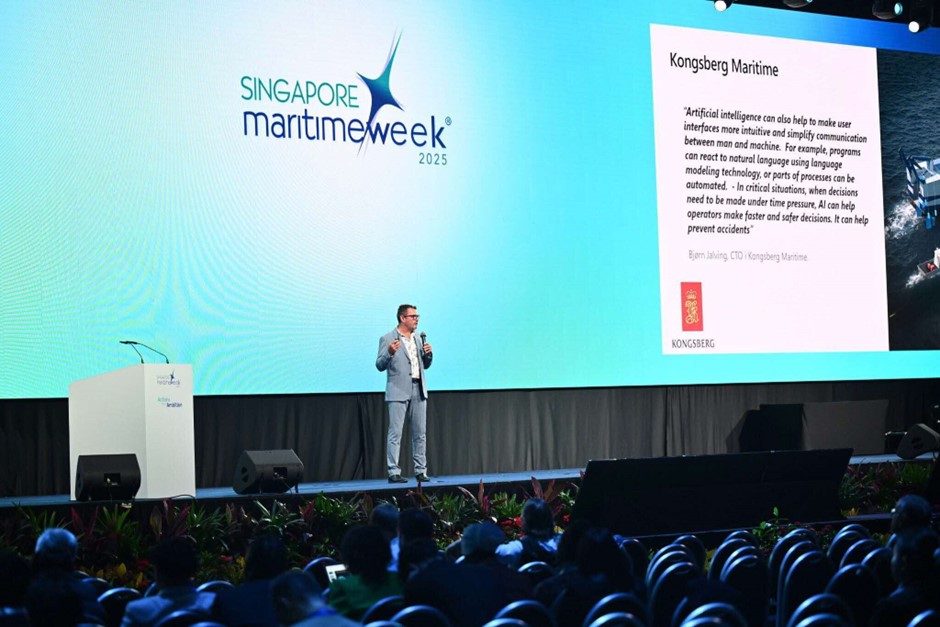
Brett Lightfoot, Asia Regional Leader for Government at Microsoft, highlighted the importance of an iterative approach to AI implementation. “When it comes to implementing hyper-scaled AI, start with specific problems, and implement in iterations.” This approach ensures that AI-driven solutions are tailored to real-world challenges, enhancing their long-term impact on maritime operations.
Retrofitting and Talent Development: A Dual Focus
As the industry grapples with decarbonisation, Jeremy Nixon, CEO of Ocean Network Express (ONE), highlighted the need to look inward. “We are looking at retrofits of our existing fleet to increase efficiency.” Retrofitting older vessels with more fuel-efficient systems or carbon capture technology is a pragmatic solution to reduce emissions while extending the lifespan of existing assets.
Nixon also emphasised that decarbonisation is not just about ships but also about the people who operate them. “Critically, it’s the people as well. Recruiting, retaining, and developing the best talent is important for us. It’s about having really good, capable people with a global mindset and an understanding of digital skills.” Without a skilled workforce that is digitally literate and aligned with sustainability goals, the industry risks falling behind in its decarbonisation efforts
Alternative Fuels: Navigating the Path to Zero-Emission Shipping
Sue-Ern Tan, Head of the International Energy Agency’s Regional Cooperation Centre, highlighted that Southeast Asia will account for 25% of global energy demand growth over the next decade, underscoring the urgent need to scale clean energy systems in tandem. She emphasised that robust infrastructure will be key to accelerating the adoption of net-zero fuels like ammonia and hydrogen, and that aligning this development with regional net-zero targets is critical to meeting decarbonisation goals affordably and securely.
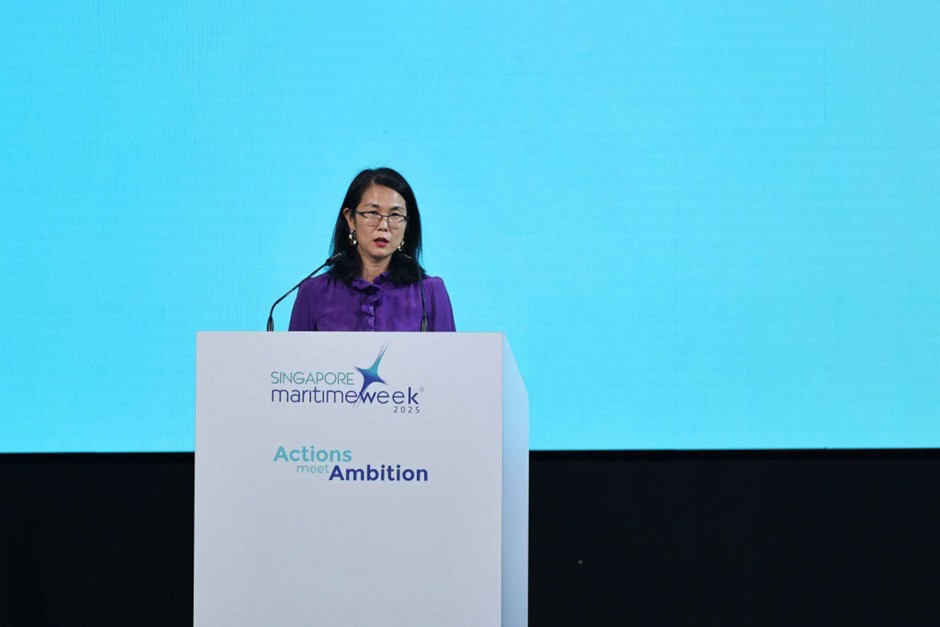
At the same time, the maritime industry’s quest for sustainable propulsion has led to the exploration of several alternative fuels, each with its own set of advantages and challenges. An example would be ammonia, which has a looming need for hyper-scaled fuel production, safe storage infrastructure and ship refuelling services.
Ammonia: High Energy Density with Safety Considerations
Ammonia offers high energy density and produces no CO₂ emissions when combusted, making it an attractive zero-carbon fuel option. It can be created using renewable energy sources, resulting in green ammonia. However, ammonia is highly toxic and poses significant safety risks, requiring stringent handling protocols and crew training. Additionally, the development of engines capable of efficiently using ammonia and the establishment of a global supply infrastructure are still in nascent stages. In support of this transition, MPA Singapore’s Maritime Energy Training Facility (METF), with more than 50 participating organisations in 2024, is well placed to equip international seafarers with the competencies needed to safely handle alternative fuels like ammonia, ensuring the maritime workforce is future-ready.
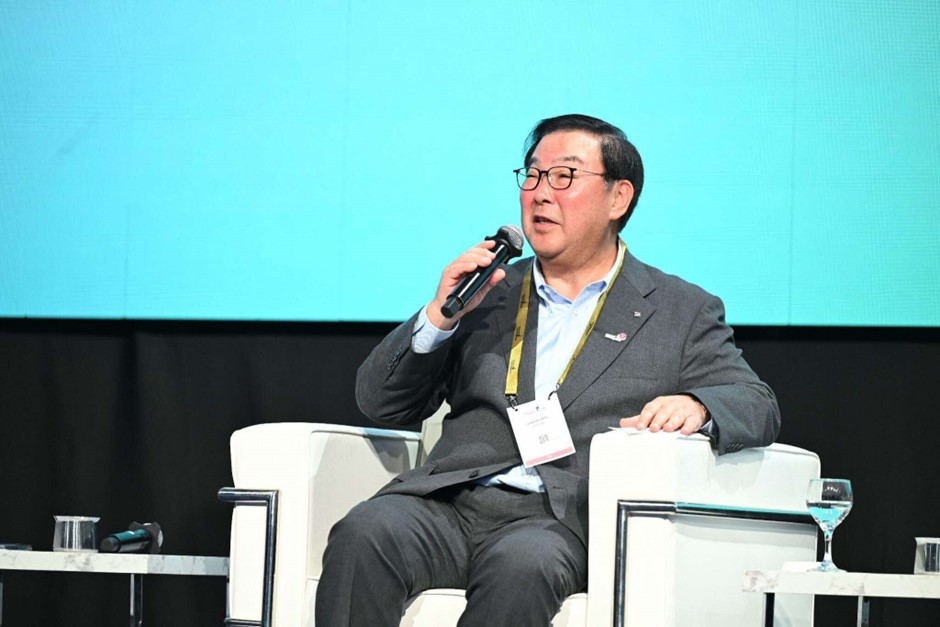
Takaya Soga, President and CEO of NYK Line, pointed out that scaling ammonia production could significantly impact its commercial viability. “If each country can increase production, it is easy for them to produce enough ammonia. In that case, the price possibly will go down.” However, without widespread production and a robust supply chain, ammonia remains a costly and challenging alternative fuel.
Liquefied Natural Gas (LNG): A Transitional Solution
LNG has gained traction as a transitional fuel due to its ability to reduce CO₂ emissions by approximately 20-30% compared to traditional marine fuels. Its established infrastructure and relative maturity make it an accessible option for shipowners seeking immediate emission reductions. However, LNG is still a fossil fuel and its use results in greenhouse gas emissions, including methane, which has a higher global warming potential than CO₂. This positions LNG as a bridge rather than a destination in the journey toward full decarbonisation.
Methanol: Versatile and Emerging
Methanol is a promising alternative due to its versatility and cleaner-burning properties. It can be produced from natural gas, coal, biomass, or CO₂, offering pathways to lower carbon emissions. Methanol can be used in existing internal combustion engines with minimal modifications, facilitating its adoption. However, challenges include the current limited availability of green methanol and the need for dedicated infrastructure for storage and bunkering. Hydrogen: Zero-Emission Potential with Storage Challenges
Hydrogen is considered a zero-emission fuel, emitting only water vapour when used in fuel cells. It can be produced from various sources, including renewable energy, leading to green hydrogen. However, hydrogen’s low energy density and storage challenges, particularly the need for cryogenic temperatures or high-pressure systems, complicate its use in maritime settings. Infrastructure for hydrogen production, storage, and bunkering is also underdeveloped. Despite these hurdles, initiatives like Norway’s hydrogen-powered ships are pioneering their application in the maritime sector.
Towards a Just and Collaborative Transition
The maritime industry’s transition to a low-carbon future must be just, equitable, and collaborative. The energy transition cannot afford to leave developing nations and smaller shipping companies behind. To ensure a level playing field, regulatory bodies, industry leaders, and governments must align their efforts.
Knowledge Sharing and Inclusion: A Global Responsibility
Takaya Soga of NYK Line stressed the importance of sharing knowledge and expertise to empower seafarers. “We need to share know-how and knowledge with our seafarers. We have started getting female candidates in the last 3 years in our training centres.” This emphasis on diversity and inclusion ensures that the next generation of maritime professionals has the skills and insights necessary to navigate a changing industry.
Further highlighting the industry’s dedication to workforce development, Takahiro Rokuroda, General Manager of NYK’s Next Generation Fuel Business Group, discussed initiatives to ensure seafarer safety on ammonia-fueled ships. Drawing from the development of the ammonia-fueled tugboat Sakigake, he emphasised the need for comprehensive training and safety measures as the industry transitions to alternative fuels.
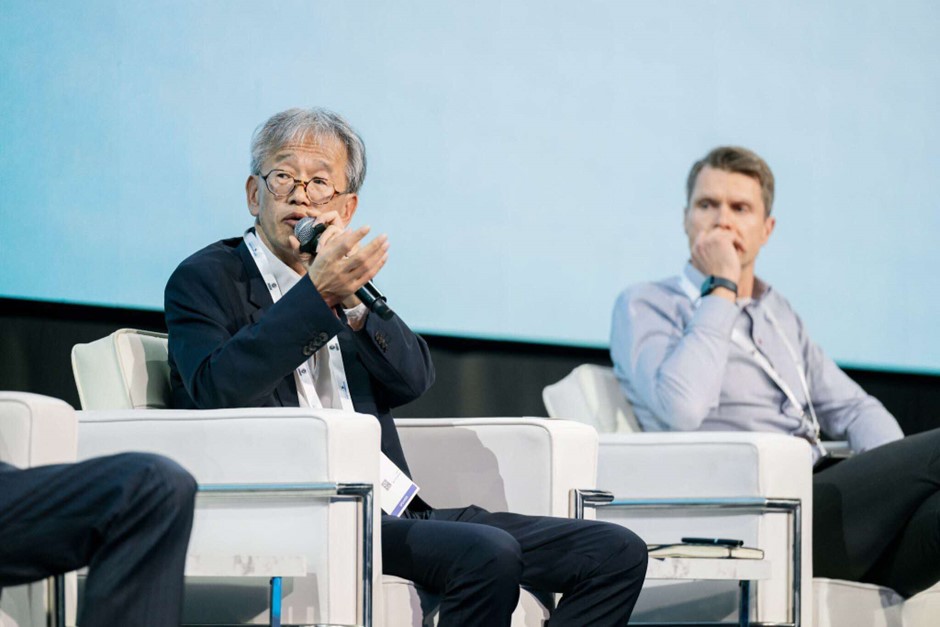
Similarly, Hideki Suzuki, President of MTI Co., Ltd., a subsidiary of NYK, addressed the challenges and prospects of autonomous ships. He underscored the importance of preparing the maritime workforce for future technological advancements, ensuring that seafarers are equipped with the necessary skills and knowledge to operate in increasingly automated environments.
A Focus on Digital Innovation
Incentivised technology adoption and fair treatment across all regions as the industry adopts this technology will be critical. As Christopher J. Wiernicki, Chairman and CEO of ABS, aptly summarised, “I think what we heard [this morning] is that all of us need to learn to embrace change.”
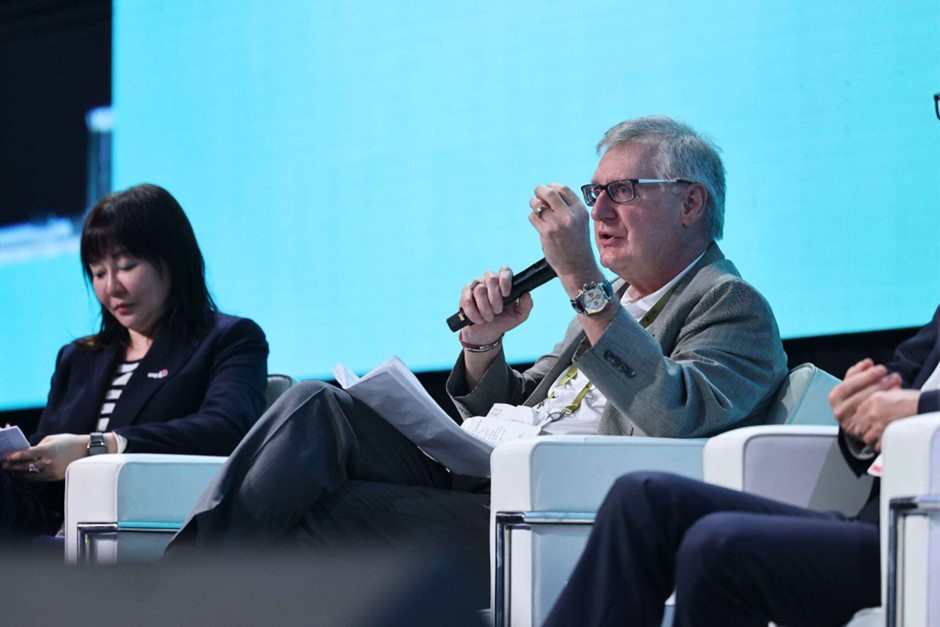
Wiernicki also highlighted how digital innovations such as Singapore’s Maritime Digital Twin, which was launched at Singapore Maritime Week 2025, can enhance operational performance and safety. Unveiled at Singapore Maritime Week 2025, the Maritime Digital Twin leverages vast amounts of data, advanced analytics, to create a dynamic and comprehensive virtual representation of the physical maritime environment, encompassing ports, vessels, and their operational interactions. The Maritime Digital Twin will drive substantial improvements in operational efficiency and safety within the maritime ecosystem by providing a detailed and real-time understanding of maritime activities.
“Whether you’re a port, or whether you’re a ship—the Maritime Digital Twin is a great example of using data to drive performance and improve safety.” As the industry charts a course toward decarbonisation, leveraging data-driven insights will be essential in identifying areas for improvement and driving lasting change.
In addition, Sveinung Oftedal, Chief Negotiator for Green Shipping at Norway’s Ministry of Climate and Environment, emphasised the importance of inclusive policy-making: “If you define clear winners and losers in economic terms, the follow-up will not be good. We need a solution where all have benefits.” Margi Van Gogh, Head of Supply Chain and Transport at the World Economic Forum, praised collaborative efforts, stating, “What Singapore is doing with the Port of Rotterdam is groundbreaking, and it is a lighthouse for the industry.” These insights underscore the necessity for equitable and cooperative approaches as the maritime sector advances towards net-zero emissions.
Steering Towards a Sustainable Horizon
Climate change is not a distant threat. It is an unfolding reality that demands immediate action. Decarbonisation in the maritime sector is no longer a matter of ‘if’, but ‘how quickly and effectively’ it can be achieved. The path forward requires a delicate balance of technology, regulation, and collaboration.
As the maritime industry navigates these turbulent waters, one thing remains clear: the voyage to net-zero emissions will be defined not by individual efforts but by collective resolve. With aligned action and a shared vision, the industry can meet its decarbonisation goals and ensure a more sustainable future for generations to come.



Our Partners
Innovation Partners
SMW 2026 SPONSORS & MEDIA PARTNERS
Lead Sponsor

Exclusive Conference Sponsor
Gold Sponsor
Expo Theatre & Talent Pavilion Sponsor
SILVER SPONSORS

.png?sfvrsn=ed02dac0_1)
.png?sfvrsn=32fb3a0e_1)

.png?sfvrsn=7a5961fe_1)

.png?sfvrsn=15c03f61_1)
.png?sfvrsn=c5172256_1)
Bronze Sponsor



Delegate Lanyard Sponsor
Supporting Sponsors
 Transport Sponsor
 Business Matching Sponsor
Supporting Partners










.png?sfvrsn=2bf93b1_1/marin-technologies-forum-partner-logo-(1).png)







Official Media Partner
Official Trade Media Partner

Trade Media Partners